Why Generative AI Needs Guardrails in Business Workflows
Generative AI tools have moved quickly from experimental demos to practical workplace assistants. They draft emails, summarise reports, generate code snippets and even produce marketing copy in seconds. Yet for all their speed and apparent fluency, these systems come with limitations that become obvious when you try to integrate them into real business processes. Understanding those limits is the first step toward using generative AI responsibly, and that is what responsible AI training is really about: learning where the technology works, where it stumbles, and how to keep it safe.
How Generative AI Actually Works
Generative AI models are large neural networks trained on vast amounts of text, images or code. They learn statistical patterns from that training data and then generate new content by predicting what comes next. The result can look convincingly human because the model has absorbed so many examples of human writing. But the model does not understand meaning the way a person does. It has no grasp of truth, context or intent. It produces output that looks correct even when it is entirely wrong. This is often called hallucination, and it is a core limitation, not a bug that will be fixed in the next update.
For a business process, that matters. If an AI drafts a customer email with a factual error, the person sending it may not catch the mistake. If it generates a line of code that introduces a security vulnerability, the developer might miss it during a quick review. The fluency of the output makes it harder to spot problems, because the text reads so naturally.
Data Privacy and Sensitive Information
One of the most immediate concerns when using generative AI in a business is data privacy. Many organisations handle sensitive information: customer records, financial data, internal strategy documents, trade secrets. When an employee pastes that information into a public AI tool, the data may be processed on servers outside the company's control. It could be stored, used for retraining, or exposed in ways that violate compliance requirements.
Access control becomes a practical challenge. Who in the organisation can use the AI tool? What data can they feed into it? Without clear policies, a junior employee might accidentally upload confidential material into a system that logs everything. Responsible AI training addresses this by teaching teams to assess risk before they use any generative AI tool. They learn to ask: does this tool store my input? Can I delete it? Is the data encrypted? The goal is not to ban AI, but to use it inside boundaries that protect the business.
Bias and Unreliable Outputs
Because generative models learn from public data, they also learn the biases present in that data. A model trained on internet text will reflect stereotypes, cultural assumptions and skewed perspectives. In a business context, that can produce output that is subtly discriminatory or simply inappropriate. A recruitment chatbot might favour certain demographics. A customer service bot might respond differently depending on the tone of the query.
Bias is not something you can remove by tweaking a single setting. It is baked into the training data, and it surfaces unpredictably. The only reliable countermeasure is human oversight. Someone needs to review every output before it reaches a customer or becomes part of a decision. That sounds obvious, but in practice teams often skip this step because the AI output looks so polished. They assume it is correct. Responsible AI training builds the habit of treating every AI-generated piece as a draft that requires verification.
Human Oversight and Output Monitoring
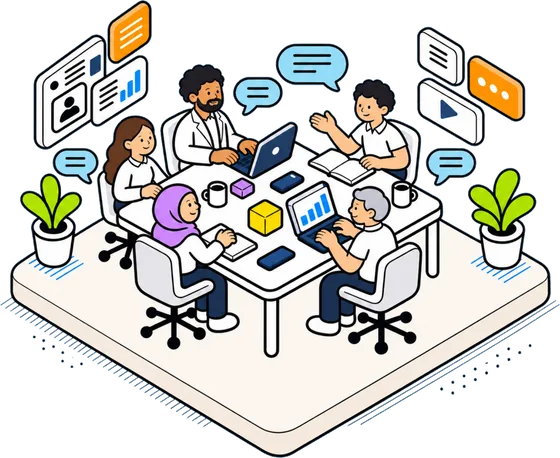
Human oversight is not just about catching errors. It is about knowing what to look for. Output monitoring means checking for accuracy, appropriateness, tone and alignment with company policy. For example, a marketing team using generative AI to create social media posts needs to verify that the post does not contain false claims or sensitive language. A legal department using AI to summarise a contract must check that the summary captures all critical clauses and does not invent terms that were never there.
Setting up a monitoring process requires planning. Who reviews the output? How quickly? What happens when an error is found? These questions are part of a broader risk assessment that every organisation should conduct before rolling out generative AI tools. The assessment does not need to be complicated. It can be a simple checklist: What is the cost of an error? How easy is it to detect a mistake? Can the output cause harm to a customer or the business? If the answer to any of these is concerning, then the AI tool needs tighter guardrails or should not be used at all for that task.
The Limits of Current Models in Complex Processes
Generative AI is good at open-ended tasks like brainstorming or drafting. It is much less reliable for tasks that require strict logic, numerical accuracy or multi-step reasoning. If you ask a model to calculate a discount on an invoice, it might get the numbers right or it might not. It has no internal calculator. It is predicting words, not performing arithmetic. The same applies to any process that involves rules, compliance or precise data handling.
For example, consider a workflow that processes customer refunds. A generative AI tool could draft the refund email, summarise the reason for the refund and suggest a follow-up action. But if it gets the refund amount wrong, or misinterprets the policy, the result is a frustrated customer and extra work for the support team. The AI can assist, but it cannot be trusted to execute the process independently. That is why many organisations pair AI with a human-in-the-loop system, where every critical action is reviewed before it is taken.
Where Training Makes a Difference
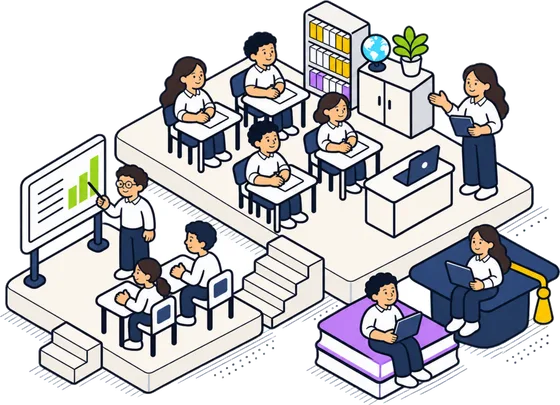
Courses like the one offered by UCC help professionals understand these limitations in a hands-on way. The curriculum typically covers how to build a simple generative AI application, but more importantly, it teaches participants how to evaluate the output, set boundaries and implement safeguards. The goal is not to turn everyone into a machine learning expert, but to give them the practical judgment needed to use AI responsibly in their own roles.
Participants learn to run a risk assessment on a proposed AI use case. They practice identifying scenarios where bias might appear. They work through examples of data privacy failures and discuss how access control could have prevented them. This kind of responsible AI training shifts the focus from what the AI can do to what the organisation should let it do. It is a subtle but important distinction.
What This Means for the Reader
If you are a business professional considering generative AI for your team, the key takeaway is not to be impressed by the demo. Look at the failure modes. Ask what happens when the model gets something wrong. Plan for oversight from day one, not as an afterthought. The organisations that get the most value from generative AI are not the ones that adopt it fastest. They are the ones that adopt it with clear rules, regular output monitoring and a realistic understanding of its limits.
Responsible AI training is becoming a standard part of workforce development because the technology is too useful to ignore but too risky to deploy carelessly. Whether you attend a formal course like the one at UCC or build your own internal training program, the principles are the same: know what the model can do, know what it cannot do, and always keep a human in the loop. That is how you turn generative AI from a novelty into a reliable business tool.